
AI Article Assistant
Ask questions, summarize, or extract key takeaways from this article.
How Indian Freelancers Are Actually Making ₹1 Lakh Per Month — The Real Numbers
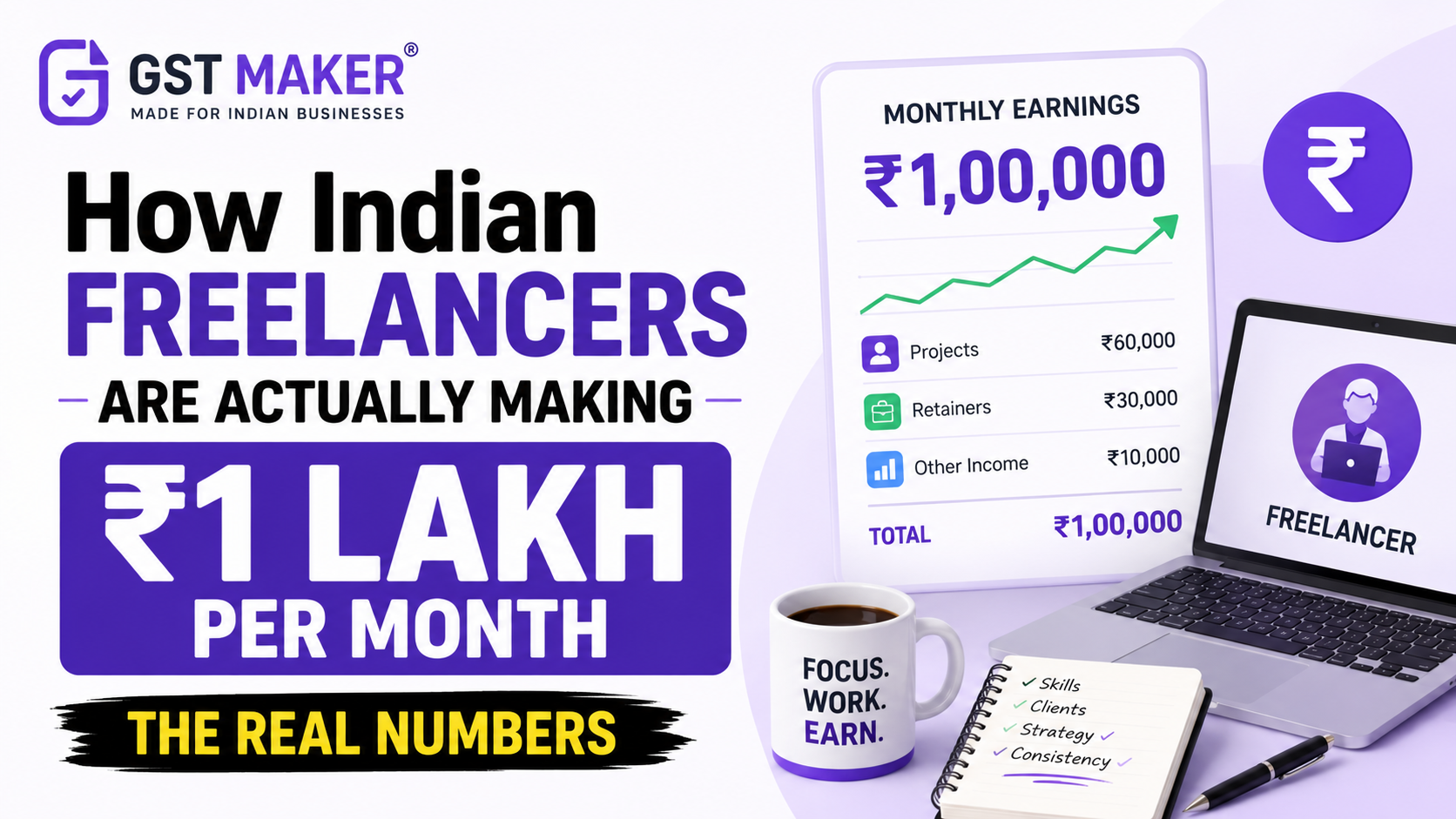
Let me tell you what the data actually says — because most articles on this topic either paint a rosy picture or make it sound impossible.
The average income of freelancers across India is ₹20 lakh per annum, and 23% of them make over ₹40 lakh per annum. That is not a headline from a motivational blog. That is real data.
₹20 lakh per year is roughly ₹1.67 lakh per month. So the average Indian freelancer — not the top 1%, the average — is already past the ₹1 lakh mark annually.
But here is what those numbers hide. The gap between the bottom and the top is enormous. Freelancers can earn anywhere from ₹30,000 per month at the beginner level to ₹1 lakh per month at an advanced stage. And those at the very top — the ones working with global clients on high-demand skills — earn significantly more.
So the question is not whether ₹1 lakh per month is achievable. It clearly is. The question is what actually separates the people who get there from the ones who stay stuck at ₹30,000–40,000.
I have had enough conversations with Indian freelancers to have some honest answers.
The Skills That Actually Pay ₹1 Lakh Per Month
Not all freelance skills are equal in 2026. And pretending otherwise does not help anyone.
The freelance market in 2026 is being shaped by artificial intelligence, automation, creator-led businesses, and digital transformation. Emerging freelance careers in these areas offer flexible work opportunities, access to international clients, and strong income potential.
Here is what the market is actually paying right now:
Software and web development — This is still the highest-paying category for Indian freelancers. Software development and full stack roles command $30 to $80 per hour in tier-1 cities and $18 to $40 per hour in tier-2 cities when working with international clients. At $30 per hour and 40 billable hours per month, that is $1,200 — roughly ₹1 lakh. And that is the floor, not the ceiling.
UI/UX design — Design has become one of the fastest-growing freelance categories. As every business rushes to build digital products, good designers are genuinely scarce. Experienced UI/UX designers working with startups and product companies can charge ₹3,000–8,000 per hour.
Digital marketing and SEO — The demand here is massive because every business needs customers and most business owners do not know how to find them online. Experienced performance marketers managing significant ad budgets can charge ₹60,000–1,50,000 per month for a single retained client.
Content writing and copywriting — The range here is wide. Generic content writing pays ₹1–3 per word. Strategic copywriting — landing pages, email sequences, product copy — pays ₹50,000–2,00,000 per project. The skill is the same. The positioning is different.
AI and machine learning — AI and machine learning engineering commands the highest rates globally, with senior specialists earning $120–$300 per hour. The World Economic Forum projects AI skills will continue showing the highest demand growth. Indian freelancers in this space are still rare enough that the demand far outpaces supply.
The Real Reason Most Freelancers Stay Stuck Below ₹50,000
It is rarely the skill.
I have spoken to genuinely talented developers, designers, and writers who cannot break ₹40,000 per month. And I have seen people with average skills consistently billing ₹1.5 lakh. The difference is almost never about capability.
It comes down to three things.
Pricing based on effort instead of value. Most freelancers price by how long something takes them. Senior freelancers price by what the outcome is worth to the client. A logo that takes you 10 hours to design is not worth ₹10,000 because of the hours. It is worth what that logo does for the client's business. These are very different numbers.
Staying in the wrong market. International clients pay two to three times higher than domestic clients because of market and currency differences. A web developer charging ₹30,000 for a project from an Indian startup could charge $800–1,200 from a US or UK client for the same work. That is ₹65,000–1,00,000. Same skill. Different market.
Treating it like a job instead of a business. Freelancers who stay stuck are the ones who wait for work to come to them. Freelancers who scale are the ones who actively build visibility — through LinkedIn, through their own content, through referral systems, through a professional online presence that includes a proper website and proper billing.
That last point is where billing matters more than people think. A freelancer who sends professional GST invoices, responds quickly, and keeps client communication organised looks and feels different from one who sends a WhatsApp message with a bank account number. The work might be identical. The perception is not.
The Math of ₹1 Lakh Per Month
Let me make this concrete.
There are multiple ways to get to ₹1 lakh per month as an Indian freelancer. Here are three that actually work.
Route 1 — Two or three mid-size retainer clients
₹35,000/month × 3 clients = ₹1,05,000
This is the most stable path. You need three clients who value your work enough to pay monthly and stay. Social media management, SEO retainers, accounting services, content writing — these all lend themselves to this model. The challenge is finding clients who want ongoing work, not just one-off projects.
Route 2 — Higher rates from fewer clients
₹1,00,000 ÷ 20 billable hours = ₹5,000 per hour
This sounds extreme for Indian freelancers. It is not, if you are solving the right problems for the right clients. A consultant who saves a company ₹20 lakh in costs can justify a ₹1 lakh engagement. A developer who builds a product feature that generates revenue can justify ₹5,000 per hour. The positioning has to match the rate.
Route 3 — International clients
Indian freelancers average $15–$25 per hour for tech roles on platforms like Upwork. At $25 per hour and 40 billable hours per month, that is $1,000 — about ₹83,000. Push that to $30 per hour with a bit of experience and you are past ₹1 lakh. And that is Upwork rates — direct international clients pay significantly more.
What Nobody Talks About — The Costs of Freelancing
Here is the honest part that most ₹1 lakh articles skip.
₹1 lakh gross is not ₹1 lakh in your pocket. There are real costs.
Self-employment tax. Once your income crosses ₹2.5 lakh per year, you start paying income tax. At ₹12 lakh annual income (₹1 lakh per month), your tax liability under the new regime is approximately ₹1,17,000 per year — roughly ₹10,000 per month. Under the old regime with deductions, it could be lower.
GST. Cross ₹20 lakh in annual income and GST registration is mandatory. You collect 18% GST from clients — but you also deposit it with the government. The net impact on your pocket is zero if you charge clients GST on top of your fee. But it means more compliance work.
No benefits. No PF. No health insurance from an employer. No paid leave. You need to budget for these yourself. Health insurance alone for a family can run ₹15,000–25,000 per year.
Slow months. ₹1 lakh per month on average does not mean ₹1 lakh every month. January and August tend to be slow. Client budgets get cut. Projects get delayed. Experienced freelancers keep 3 months of expenses as a buffer.
Freelancers generally need to earn 25–40% more gross than a salaried person to match total compensation once you account for taxes, benefits, and income instability. So ₹1 lakh freelancing income is roughly equivalent to a ₹65,000–75,000 per month salaried job in terms of actual financial security. Still good. Just needs to be understood correctly.
The One Thing That Holds Most Freelancers Back at ₹70,000–80,000
They stop investing in their own setup.
Better clients want professional systems. A corporate company considering a ₹80,000 per month contract wants to see:
- A professional invoice with GSTIN and proper formatting
- Clear payment terms and a billing process that does not require chasing
- A portfolio or website that communicates expertise
- Communication that is prompt and organised
Most freelancers invest heavily in their skill but not in the systems around it. The billing, the communication, the professional presentation — these are afterthoughts.
They should not be.
Your invoice is often the last thing a client sees before deciding whether to come back. If that invoice is a messy PDF with wrong GST calculations or arrives a week after the work was done — it plants a seed of doubt that the work itself erases.
The Practical Starting Point
If you are currently making ₹40,000–60,000 per month and want to cross ₹1 lakh — here is what I would actually do.
Raise your rates with new clients immediately. Do not change rates with existing clients yet — but every new client gets a higher number. See how the market responds.
Move toward retainers wherever your service allows. One-off projects are exhausting to maintain at scale. Monthly retained clients compound.
Get your professional setup right. A proper website. A LinkedIn profile that communicates your expertise. And a billing system that makes you look like a serious professional. Not a freelancer who sends WhatsApp messages with account numbers.
That last piece is where a lot of people spend zero time. And it shows.
₹1 lakh per month is not a fantasy number for Indian freelancers in 2026. The data shows it is achievable, and for many, it is already happening.
But it requires treating freelancing like a business — with proper pricing, proper client acquisition, and yes, proper billing and compliance.
If the billing and GST side of your freelance business is still a mess — start there. It is the fastest way to look more professional, get paid faster, and stop losing corporate clients to competitors who have their paperwork in order.
👉 GST Maker handles the billing side — free at gstmaker.com
Get that sorted. Then focus on the rates.